

Palomeras de Etxalar
Cada otoño, siempre que sople viento del norte o del este, el cielo de Etxalar es testigo de la pasa de miles de palomas. Hace más de 600 años, un pastor adquirió la costumbre de tirarles piedras. Al ver que descendían, un obispo le animó a colocar redes para atraparlas. Y así nació la «captura de paloma con red», una singular forma de caza, única en la península ibérica, que sigue practicándose desde entonces. A lo largo de su historia ha contado con espectadores de lujo como el emperador Napoleón III o los reyes Alfonso XII y XIII. En la actualidad, ha sido declarada Bien de Interés Cultural.
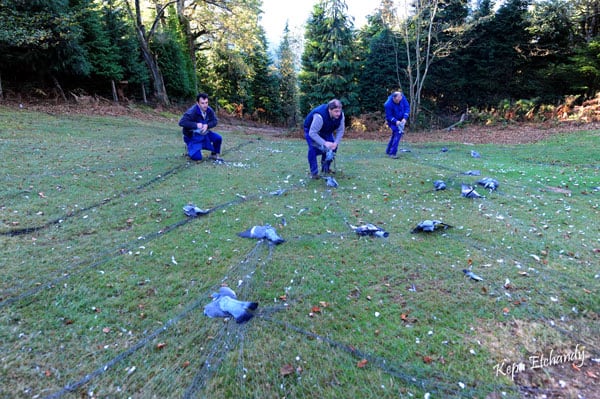


Con paletas que asemejan halcones, banderines, turutas y redes, así se lleva a cabo la tradicional caza de paloma con red en Etxalar.
El cazador que está en la torre de vigía da el aviso. Ha avistado palomas. Hace la señal con el banderín. Los paleteros lanzan entonces las paletas para hacer descender al bando palomero y encaminarlo hacia las redes y… cuando las palomas están bajas, echan la red. Por eso en Etxalar las palomas no se cuentan por unidades, sino por docenas.
En temporada de caza, se hacen visitas guiadas a las palomeras para ver «in «situ» esta ancestral y peculiar modalidad de caza. También puede verse esta tradición el Día de Palomeras, una jornada de puertas abiertas en la que los etxalartarras muestran su más preciada tradición.
Tratado de Lizaieta
Todos los años, a finales de septiembre se rememora el Tratado de Lizaieta. Comienza la cuenta atrás para la temporada de caza.
El Tratado de Lizaieta data de 1856, pero tuvo tres hitos documentados en 1959, 1984 y 1990
Fue el 4 de septiembre de 2011 cuando los alcaldes de Etxalar y Sara recuperaron dicho Tratado de entendimiento. Desde entonces, todos los años, cuando se acerca octubre renuevan la firma con una fiesta en el collado de Lizaieta. Una jornada de hermanamiento entre ambas localidades que permite conservar esta ancestral práctica cinegética.