

Gorramendi y los restos arqueológicos
En Baztan se conocen unos 600 megalitos, erigidos por los primeros grupos humanos de productores que se asentaron en el valle, desde hace unos 5.000 años hasta la llegada de los romanos. En el collado de Gorramendi se puede disfrutar de varios de ellos como Crómlech de Maestrugain que vemos en la imagen.
Los estudios científicos realizados en estos restos arquológicos revelan que los primeros baztaneses vivieron, murieron y fueron enterrados aquí, en el Valle, allá por el siglo XIII antes de Cristo. Así como que hablaban nuestro idioma, el euskara, 2000 años antes de que llegara el castellano.
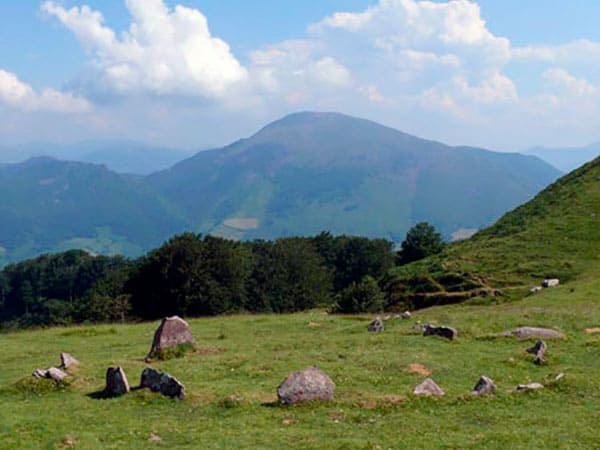
Olvidados durante siglos, en las ultimas décadas han despertado el interés de historiadores que han realizado una importante labor de estudio y catalogación.
De entre todos estos restos hay que destacar algunos, más conocidos que otros, como por ejemplo el monolito de Urdintz, los dólmenes de Otaltzu, Xolborroko harria (en Legate), Urkizte, Luurzu, Beoltrin, Autrin, Zalu y los cromlech de Maistrugain y Soalar. También encontramos el túmulo de Urlegi (Alkurruntz), dólmenes en Uztanborro (Irurita), Sorginetxoa (Erratzu), Pas de Rolan (estacion Erratzu-Alduides), Oiza (a 699m, cerca de Elizondo), dos en Otsondo, seis más y un menhir en el sector de Legate, en Lekaroz, el cromlech y el menhir de Iparla, los dólmenes de Elorta y Aznabazterra (en Erratzu), el menhir de Bagordi…
Hay diferentes rutas que permiten disfrutar de estos restos que nos transportan miles de años atrás. He aquí una de ellas.